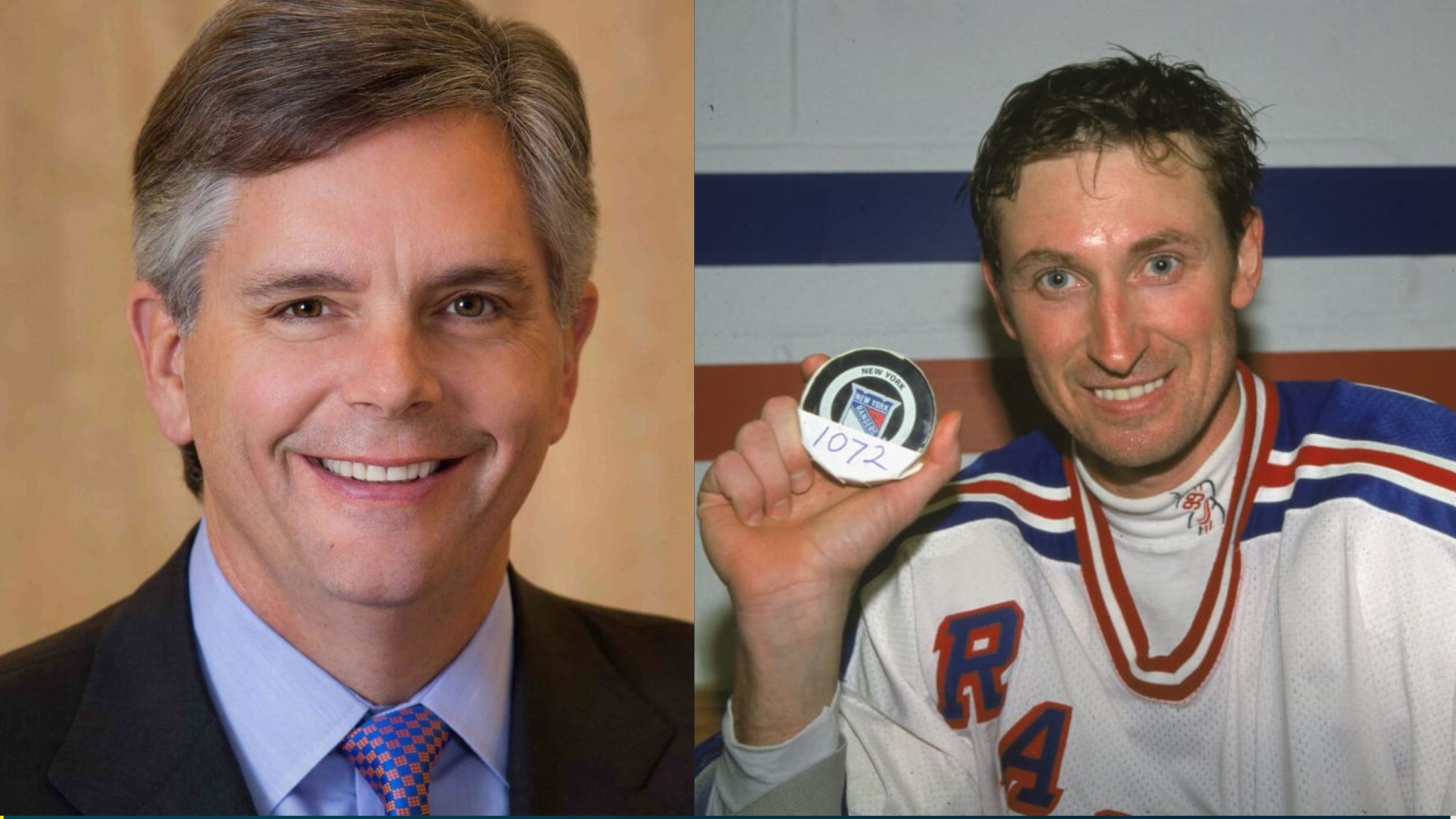
Wayne Gretzky and Larry Culp are recognized for achievements in very different fields. Gretzky became one of the greatest players in ice hockey history, earning worldwide recognition for his scoring ability, vision, and leadership. Larry Culp built his reputation in business, becoming a prominent corporate executive known for operational discipline and organizational change. Although one made his mark on the ice and the other in the boardroom, both offer interesting examples of how preparation, decision-making, and leadership can influence long-term success. Understanding Wayne Gretzky and Larry Culp means looking beyond their professional titles to examine their careers, accomplishments, leadership styles, and the distinct paths that brought them to prominence.
Who Are Wayne Gretzky and Larry Culp?

Wayne Gretzky
Ice hockey legend, former NHL player, and sports executive.

Larry Culp
Corporate leader, former Danaher CEO, and GE CEO.
Wayne Gretzky was born on January 26, 1961, in Brantford, Ontario, Canada. His extraordinary understanding of hockey helped him dominate the National Hockey League (NHL) during his playing career. Nicknamed “The Great One,” he became synonymous with scoring records, creative passing, and an ability to anticipate how a game would develop.
Larry Culp, born in 1963, is an American business executive whose career has centered on management, industrial operations, and corporate performance. He became known for his leadership at Danaher before taking charge of General Electric in 2018. His subsequent role in the transformation of GE into more focused businesses established him as an influential figure in American industry.
Despite their different professions, both men built reputations through sustained performance rather than a single achievement.
Wayne Gretzky’s Journey to Hockey Greatness
A remarkable career in the NHL
Gretzky entered the NHL with the Edmonton Oilers in 1979 after the franchise joined the league from the World Hockey Association. He quickly established himself as an exceptional offensive player. Rather than relying solely on speed or physical strength, he used anticipation, positioning, and an unusual ability to recognize passing opportunities before opponents could react.
During the 1980s, Gretzky helped turn Edmonton into one of hockey’s dominant teams. The Oilers won four Stanley Cup championships with him between 1984 and 1988. His partnership with talented teammates, including Mark Messier, Jari Kurri, and Paul Coffey, helped create a team remembered for its attacking style and offensive production.
Gretzky’s individual achievements were equally extraordinary. He won the Hart Memorial Trophy as the NHL’s most valuable player nine times and the Art Ross Trophy as the league’s leading scorer ten times. His performance during the 1985–86 season produced 215 regular-season points, a record that remains a defining achievement in professional hockey.
Life beyond professional hockey
In 1988, Gretzky was traded to the Los Angeles Kings, a move that helped increase hockey’s visibility in California and other nontraditional markets. He subsequently played for the St. Louis Blues and New York Rangers before retiring in 1999.
After retirement, he continued working in hockey as a coach, executive, and ambassador. He served as head coach of the Phoenix Coyotes and later became involved in business ventures and sports-related activities.
His legacy extends beyond statistics. Gretzky changed how many people understood offensive hockey, demonstrating that awareness, timing, and teamwork could be just as valuable as raw athletic ability.
Larry Culp’s Rise in Corporate Leadership
Building a reputation at Danaher
Larry Culp followed a different route to professional recognition. He earned an economics degree from Washington College and an MBA from Harvard Business School before beginning a corporate career that would eventually take him to the highest levels of industrial management.
Culp joined Danaher Corporation in 1990. The company operates across industrial technology, healthcare, and related markets. He advanced through several leadership positions before becoming president and chief executive officer in 2001.
During his tenure, Danaher expanded substantially. Culp became associated with the company’s disciplined approach to operational improvement, which emphasized measurable performance, efficient processes, and continuous learning.
One important element of Danaher’s management philosophy was the Danaher Business System. This approach applies lean-management principles to improve productivity, product quality, and customer outcomes. Culp’s leadership helped establish the system as a central part of the company’s operating culture.
Transforming General Electric
In October 2018, Culp became chairman and chief executive officer of General Electric. He was the first outsider appointed to lead the company as CEO, taking responsibility during a challenging period marked by financial pressures and the need to simplify a complex industrial business.
His strategy involved reducing debt, improving operational performance, and narrowing the company’s focus. Instead of attempting to manage every business under one large corporate structure, GE moved toward a more concentrated portfolio.
A major milestone came with the separation of GE HealthCare in 2023 and GE Vernova in 2024. These transactions left GE Aerospace as an independent public company focused on aviation technology, engines, and related services.
Culp became CEO of GE Aerospace in 2022 and its chairman and CEO when the company launched as a separate public business in April 2024. His responsibilities include overseeing a business serving commercial aviation, military aviation, and other aerospace customers.
The transformation illustrates the type of leadership required when a large organization must balance financial restructuring with product development, customer service, and long-term industrial investment.
Wayne Gretzky and Larry Culp Compared
Although Gretzky and Culp work in unrelated fields, comparing their careers reveals different approaches to achievement and leadership.
| Category | Wayne Gretzky | Larry Culp |
|---|---|---|
| Main field | Professional ice hockey | Corporate management |
| Best known for | Exceptional scoring, playmaking, and hockey records | Industrial leadership and business transformation |
| Major organization | Edmonton Oilers | Danaher and General Electric |
| Signature achievement | Four Stanley Cup championships with Edmonton | Leading GE’s restructuring and the creation of independent businesses |
| Core strength | Anticipation, creativity, and teamwork | Operational discipline, strategy, and execution |
| Long-term impact | Influenced hockey and expanded its cultural reach | Influenced industrial management and corporate strategy |
The comparison should not be taken as a claim that one person’s accomplishments are equivalent to the other’s. Gretzky’s success is measured through sporting performance, championships, and influence on hockey. Culp’s is assessed through business operations, financial decisions, organizational development, and industrial results.
Their careers offer different examples of what it means to perform at a high level in demanding environments.
What Their Leadership Styles Have in Common
Preparation and informed decision-making
Gretzky was famous for anticipating where the puck would go rather than simply reacting to where it was. His understanding of the game allowed him to identify opportunities and make decisions quickly.
Culp’s management approach also places importance on understanding how systems work. In industrial businesses, this means examining processes, identifying inefficiencies, and making changes that improve performance.
The comparison is useful because both professions reward people who can recognize patterns and act before a problem or opportunity becomes obvious to everyone else.
Teamwork over individual recognition
Hockey is a team sport, and even a player with Gretzky’s talent depended on teammates to create successful plays. His passing ability and understanding of team positioning were central to his success.
Corporate leadership operates on a similar principle, although the responsibilities are different. A CEO depends on engineers, production teams, sales professionals, financial experts, and managers to turn a business strategy into results.
Neither individual brilliance nor a strong plan can replace effective collaboration.
Consistency and continuous improvement
Gretzky maintained remarkable offensive production across a long NHL career. His achievements required years of practice, adaptation, and sustained concentration.
Culp’s experience at Danaher and GE reflects a different form of consistency: establishing management practices that encourage ongoing improvements rather than relying on a single major initiative.
For athletes and business leaders alike, lasting success generally requires repeated good decisions, an ability to learn from setbacks, and a willingness to adapt when circumstances change.
Frequently Asked Questions
Are Wayne Gretzky and Larry Culp related?
There is no established public evidence that Wayne Gretzky and Larry Culp are related. They are known for separate careers in professional sports and corporate leadership.
What is Wayne Gretzky famous for?
Wayne Gretzky is famous for his historic NHL career, four Stanley Cup championships with the Edmonton Oilers, nine Hart Trophy wins, and remarkable scoring and assist records.
What is Larry Culp known for?
Larry Culp is known for leading Danaher Corporation and serving as chairman and CEO of General Electric before becoming chairman and CEO of GE Aerospace. His work has focused on operational improvement and corporate restructuring.
Did Wayne Gretzky work for General Electric?
Gretzky is not known for holding an executive position at General Electric. His professional career has primarily involved hockey, sports management, and business ventures.
What can business leaders learn from Wayne Gretzky?
Business leaders can learn from Gretzky’s emphasis on preparation, anticipation, teamwork, and making decisions with a clear understanding of the situation. These principles can be useful in management, although sporting and corporate environments have different demands.
What can athletes learn from Larry Culp?
Athletes can take inspiration from Culp’s focus on continuous improvement, accountability, and structured performance evaluation. These ideas can support training programs, team organization, and long-term development.
Conclusion
Wayne Gretzky and Larry Culp achieved distinction through different forms of expertise. Gretzky transformed professional hockey through extraordinary skill, intelligent playmaking, and sustained performance. Culp established himself as a corporate leader through operational discipline, strategic decision-making, and major organizational changes. Their careers demonstrate that excellence does not follow one universal path. Whether on the ice or in the boardroom, preparation, adaptability, teamwork, and consistent execution can help individuals achieve lasting professional influence.
Also read… Richard Liu and German Larrea: Business Empires Compared