
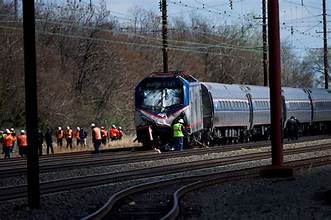
The Victor Reynolds train accident search refers to a real railroad emergency in Churchill County, Nevada, in April 2024, where a severely injured man was found beside Union Pacific tracks and rescued with the help of Churchill County Sheriff’s Office Deputy Ty Nelson. The survivor was conscious when Nelson reached him, and the remote location made evacuation unusually difficult.
One important part of the story remains less certain than many articles suggest: the publicly available law-enforcement statement about the survivor does not identify him as Victor Reynolds. That name became attached to the case online, but the strongest publicly accessible statement from the sheriff’s office refers only to “the gentleman that lost his legs in the train incident.”
The same statement provides the clearest answer to another major question. The man survived the immediate incident and was still alive and hospitalized when the sheriff’s office last had contact with him well after the rescue. Deputies had visited him in Reno and had stayed in contact with nurses monitoring his recovery. No later reliable public medical update cited here establishes his condition as of September 2026.
Victor Reynolds Train Accident: Quick Facts
| Question | Best-supported answer |
|---|---|
| When did it happen? | April 2024; secondary accounts commonly date the incident to April 7, 2024 |
| Where? | Churchill County, Nevada |
| Railroad associated with the scene | Union Pacific |
| Responding deputy | Ty Nelson, Churchill County Sheriff’s Office |
| Condition when found | Conscious but critically injured |
| Injuries | A later sheriff’s statement said the man had lost his legs |
| Was he taken to a hospital? | Yes; the sheriff later said deputies visited him in a Reno hospital |
| Did he survive? | Yes, through the sheriff’s last reported contact well after the event |
| Is “Victor Reynolds” officially confirmed as his name? | Not in the publicly accessible sheriff statement |
| What caused the incident? | Not publicly established by a reliable investigation report located for this case |
| Is his condition known in 2026? | No reliable later public medical update is established by the cited sources |
What Happened in the Nevada Railroad Incident?
Reporting published in July 2024 said Union Pacific workers spotted a badly injured man beside railroad tracks in a remote part of Churchill County and contacted law enforcement. Deputy Ty Nelson was dispatched, but normal road access to the victim was not practical. Nelson reportedly had to travel by train to reach him.
When Nelson arrived, the man was conscious despite catastrophic injuries. The report described one leg as already lost and the other as severely injured. A later statement attributed directly to then-Sheriff Richard Hickox described the patient more broadly as the man who “lost his legs in the train incident.”
The isolation of the scene complicated treatment. Emergency medical personnel also needed rail access, and an air ambulance was requested for evacuation. A July 2024 report said Nelson used his own jacket while assisting the victim and remained involved as emergency medical care was organized.
The body-camera footage that later drove much of the interest in the case is available in the EWU Bodycam video titled Cop Realizes the Dismembered Body is Alive.
View the EWU Bodycam source video on YouTube
Did the Man Survive?
Yes—at least through the last documented contact described by the Churchill County Sheriff’s Office.
A sheriff’s-office Facebook statement reproduced in a public discussion said:
“The gentleman that lost his legs in the train incident, that Deputy Nelson assisted was alive and hospitalized when we last had contact with him well after the event.”
The same statement said members of the agency traveled to Reno several times to visit him and communicated with his nurses while following his recovery.
This is stronger evidence than internet claims based on obituaries, social-media comments or assumptions from the severity of his injuries.
It does not, however, establish his present condition in 2026. The statement only confirms that he remained alive during the period in which the sheriff’s office was still following his hospitalization.
The Churchill County Sheriff’s Office official website currently identifies the agency responsible for law enforcement in the county and memorializes Richard Hickox, who served as sheriff until his death in April 2026.
Was the Injured Man Really Named Victor Reynolds?
This is the central fact-checking problem surrounding the story.
The name Victor Reynolds appears in the viral coverage and has become the standard search term for the case. A July 29, 2024 article used the name while describing the Union Pacific discovery, Deputy Nelson’s response and the difficult rescue.
But the law-enforcement wording available to the public is different. Sheriff Hickox’s follow-up referred to the survivor as “the gentleman that lost his legs in the train incident” and identified Deputy Nelson as the deputy who assisted him. It did not name the patient.
That distinction means it would be unsafe to build a biography around the name. Claims about the survivor’s age, date of birth, occupation, family, hometown, employment history or prior disability should not be presented as fact without a record that explicitly connects those details to the Nevada patient.
The accurate formulation is therefore:
“Victor Reynolds” is the name widely associated online with the Churchill County survivor, but the publicly accessible sheriff statement reviewed for this case does not confirm that identity by name.
What Caused the Train Accident?
The precise mechanism is not established in the reliable material available here.
The evidence supports a railroad-related medical emergency beside Union Pacific tracks. It supports catastrophic leg injuries, the victim being conscious when Deputy Nelson reached him, and a subsequent hospital recovery period.
It does not establish several more elaborate stories now circulating online. There is no dependable evidence cited here for claims that:
- two passenger trains collided;
- a railroad signal malfunction caused the incident;
- the survivor was an engineer commuting to work;
- a derailment caused his injuries;
- he was traveling on a scheduled passenger service;
- investigators determined a specific mechanical or human failure.
Those details should not be added simply because other websites repeat them.
The Federal Railroad Administration maintains searchable accident, casualty and rail-safety databases, with the public accident/incident system currently showing data through June 30, 2026. The FRA portal is a better starting point for checking formal U.S. railroad records than relying on anonymous accident summaries.
Search the Federal Railroad Administration Safety Data Portal
The Arkansas Obituary Is a Different Victor Reynolds
A major source of confusion is an obituary for Victor M. Reynolds of Waldo, Arkansas.
Lewis Funeral Home’s obituary, published through Legacy, states that Victor M. Reynolds was 71 and died at his home on May 20, 2024. It identifies him as a retired law-enforcement officer who had worked for the Magnolia Police Department and Columbia County Sheriff’s Office.
Those details do not match the Nevada railroad survivor’s documented circumstances. The obituary describes an Arkansas resident dying at home; it does not connect his death to Churchill County, Nevada, Union Pacific, Deputy Nelson or the railroad rescue.
The obituary therefore cannot be used as evidence that the Nevada survivor died.
Read the Victor M. Reynolds obituary published by Lewis Funeral Home
This mistaken connection is especially instructive because even the obituary guest book later received comments from people apparently arriving because of the Nevada story—another reason a matching name alone is not enough to identify someone.
Christoffer Lindhe Is Also a Different Train-Accident Survivor
Another name sometimes mixed into discussion of the Nevada case is Christoffer Lindhe.
Lindhe is a Swedish athlete whose accident happened many years earlier. Sveriges Radio reported that he was involved in a train accident in June 2006 and subsequently had both legs and his left arm amputated. By 2008, the then-19-year-old had returned to competitive swimming and competed at the Beijing Paralympics.
That timeline alone establishes that Lindhe and the man rescued in Nevada in 2024 are different people.
Read Sveriges Radio’s report on Christoffer Lindhe
Images or biographical details belonging to Lindhe should therefore not be used to illustrate or describe the person associated online with the Victor Reynolds case.
What About the Dog Mentioned in Discussions of the Video?
Online discussion of the body-camera footage frequently mentions a deceased dog reportedly associated with belongings at the scene. The public sheriff update quoted above does not explain the animal, its ownership or how it died.
That leaves no reliable basis for theories about why the dog was there or what happened before the rescue. Those theories should remain outside a factual account unless a police report, investigator, railroad official or other dependable source provides an explanation.
Why the “Victor Reynolds Train Accident” Story Became So Confusing
Three different levels of information have been blended together online.
First is the documented core: a catastrophically injured man was rescued in Churchill County; Deputy Ty Nelson assisted him; the sheriff’s office later said he had survived and remained hospitalized after the incident.
Second is an online identification: the name Victor Reynolds became associated with the survivor, although the accessible sheriff statement itself does not name him.
Third is material that came from somewhere else entirely—including the Arkansas obituary, Christoffer Lindhe’s 2006 Swedish accident and unsupported biographies that assign the Nevada survivor a profession, family history or detailed accident cause.
Keeping those categories separate resolves most of the apparent contradictions.
What Can Be Said With Confidence as of September 2026?
The strongest available evidence supports a narrower story than many search results present.
A severely injured man was found near Union Pacific railroad tracks in Churchill County, Nevada, in April 2024. Deputy Ty Nelson helped reach and assist him despite the remote location. The victim was conscious, received emergency treatment and was evacuated. A later statement from then-Sheriff Richard Hickox said the man who lost his legs was alive and hospitalized when the agency last had contact with him, and deputies had visited him in Reno while following his recovery.
What remains unconfirmed is just as important: the sheriff statement does not publicly identify the patient as Victor Reynolds, no reliable cited source establishes the exact chain of events that caused his injuries, and the last sheriff update does not tell us his medical condition in September 2026.
Until a dependable primary record provides those answers, articles should not turn missing information into biography or speculation.
Read also: Sundar Pichai and Carl Icahn: What Is the Real Connection?
