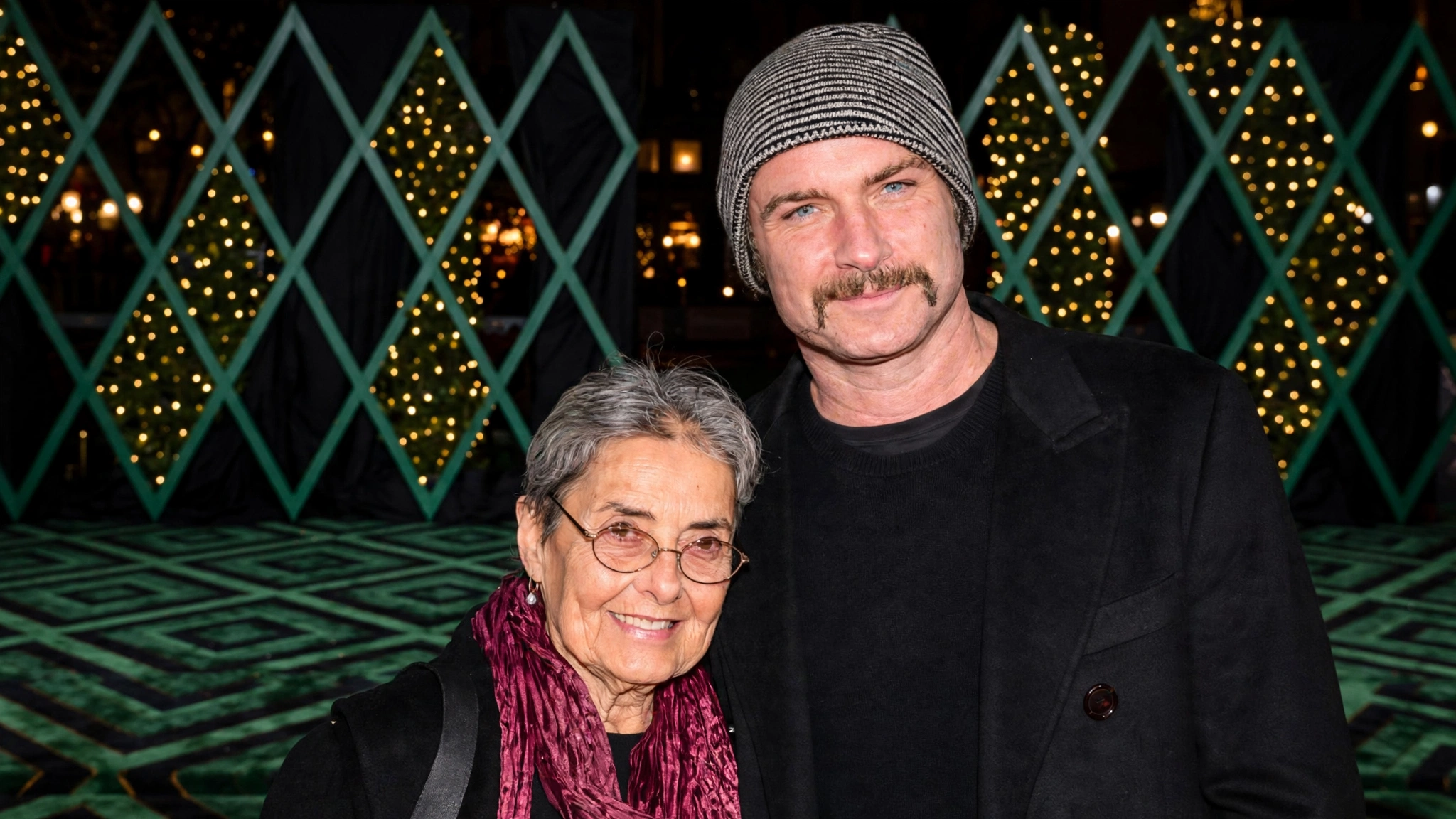
Heather Milgram, also referred to in published profiles as Heather Schreiber, is an American artist best known publicly as the mother of actor Liev Schreiber. Her own story is less a conventional celebrity biography than an account of art, unconventional parenting, financial hardship and a distinctly bohemian life in New York.
The most substantial reporting about Milgram comes from interviews conducted with her, Liev Schreiber and his father, Tell Schreiber. Those sources describe a painter and puppet-maker who supported herself in part by driving a New York taxi, raised Liev largely on her own after separating from his father, and deliberately rejected many conventional ideas about money and success.
Her influence on her son is unusually well documented. Decades after his childhood, Schreiber continued to describe the values, difficulties and independence he associated with being raised by his mother. In a 2024 Guardian interview, he again recalled growing up with a single mother who drove a cab and living in squats in New York City.
Who is Heather Milgram?
Heather Milgram is an artist and the former wife of actor and acting teacher Tell Schreiber. Their son, Isaac Liev Schreiber, became an acclaimed stage and screen actor known for Ray Donovan, Spotlight, the Scream films and numerous theater productions.
Milgram is sometimes called Heather Schreiber in profiles written about the family. A 2016 Esquire profile, for example, refers to her as Heather Schreiber while discussing the same woman identified elsewhere as Liev Schreiber’s mother, Heather Milgram.
Unlike her son, Milgram did not build her public identity around film or television fame. The strongest profiles describe her primarily as an artist, particularly a painter, with other creative work including making papier-mâché puppets. In a 2016 interview, Liev said plainly of her: “My mom was an artist.” He described painting, drawing and books as central to her life.
A precise birth date is circulated by entertainment databases and later biography websites, but the major first-hand profiles used for this article do not establish that date. For that reason, it is more accurate not to present a specific birthday or age as a firmly verified biographical fact.
An artistic life outside conventional ideas of success
Milgram’s artistic identity was closely connected to the way she lived.
John Lahr’s extensive 1999 New Yorker profile of Liev Schreiber included interviews with Heather herself. It described her as highly interested in classical music and Russian literature and documented the years when she supported herself and Liev by driving a taxi and creating papier-mâché puppets. Their Lower East Side home was extremely spare, at times lacking basic utilities and conventional furniture.
Those circumstances were not simply the result of an artist pursuing a glamorous version of bohemian life. Money was genuinely scarce. Yet accounts from both mother and son indicate that Milgram also consciously rejected materialism.
The Television Academy’s 2015 profile of Liev described Heather working as an artist and puppet-maker while driving a New York cab. Schreiber remembered a mother who found furniture among discarded objects and bought inexpensive food, but who also tried to teach him that conventional measures of wealth and status should not determine a person’s worth.
In a 2017 interview distributed by JTA and published by The Times of Israel, Schreiber described the philosophy more simply: while they lived in a Lower East Side squat, his mother wanted her children to understand that money was not the most important thing. He also remembered that despite their circumstances, books remained part of the household.
That combination—economic hardship, a deliberate skepticism toward material status and an intense emphasis on culture—is central to understanding Heather Milgram more accurately than the label “celebrity mother” allows.
Raising Liev Schreiber in New York
After Heather and Tell Schreiber separated, Liev spent much of his childhood with his mother in New York.
The family’s situation was complicated, and older reporting contains extensive accounts of the dispute between Liev’s parents. The relevant point for Milgram’s biography is that she ultimately raised him in Manhattan under circumstances very different from the privileged environment often associated with a future Hollywood actor.
Liev’s maternal grandfather, Alex Milgram, also became an important figure in his childhood. The Television Academy described Alex as a major male presence in Liev’s early life after the custody dispute. A later JTA interview similarly emphasized how important both Heather and Alex were in grounding him as he grew older.
The family’s Lower East Side years became a recurring subject in Liev’s later interviews. The New Yorker reported in 1999 that he and Heather lived in an apartment with very few possessions and, for a period, without electricity or hot water.
Twenty-five years later, the basic account remained unchanged when Schreiber spoke to The Guardian. Asked about his grandfather in 2024, he recalled growing up with a single mother in New York, said she drove a cab, and described their life in squats as challenging.
That later first-person recollection is significant because it independently reinforces the broad outline found in much older profiles without requiring newer biography sites as evidence.
The unusual cultural education she gave her son
Milgram’s influence was not limited to financial attitudes. She exposed Liev to an unusually eclectic mixture of art, literature, film and spirituality.
The 1999 New Yorker profile described a childhood involving vegetarianism, meditation, music lessons and black-and-white movies. Liev recalled being prevented for a period from watching color films; his first experience of Star Wars therefore stood in memorable contrast to the older films his mother had encouraged.
Schreiber resisted parts of this upbringing as a child. Later, however, his descriptions became more nuanced.
Speaking to the Television Academy, he credited his mother with teaching him independence from other people’s definitions of wealth and success. He also remembered her emphasizing individuality and respect for people across social boundaries.
Esquire captured a similar tension in 2016. Schreiber said he had wanted material things precisely because his childhood had lacked them, while simultaneously describing his mother’s devotion to painting, drawing and books. The result was not a simple story of either gratitude or resentment, but of an adult recognizing how strongly an unconventional parent had shaped his values.
Heather Milgram’s influence on Liev Schreiber’s career
It would be too simplistic to claim that Milgram “made” Liev Schreiber an actor. His eventual career also depended on education, theater training, professional mentors and his own ability.
Her cultural influence, however, is difficult to separate from the person he became.
The 1999 New Yorker profile connected his childhood need to observe and adapt to other people with the sensitivity to behavior that later became useful in acting. That was the writer’s interpretation rather than a measurable cause-and-effect finding, but Schreiber himself has repeatedly described his childhood as formative.
Milgram also encouraged fearlessness in unusually concrete ways. Reporting from The New Yorker and later Interview Magazine recounts that she gave Liev a motorcycle for his 16th birthday as an exercise in becoming less fearful.
More broadly, her influence appears in the values Schreiber later articulated: curiosity, skepticism about status, comfort with outsiders and a strong attachment to books and culture.
What is known about Heather Milgram’s later life?
This is an area where dates matter.
The 1999 New Yorker profile reported that Milgram had already spent about 15 years associated with an ashram in Virginia.
A much later Esquire profile provided additional context in June 2016. It reported that after Liev went to college, Heather moved to a Hindu ashram in Virginia and stayed there for almost 30 years. According to that article, Liev subsequently bought her a house across the street from the ashram.
That is the most specific well-sourced description here of her later living arrangements, but it is a 2016 account, not proof of where she lives in 2026.
The 2024 Guardian interview with Liev revisited his childhood with his mother but did not provide an updated residence, occupation or detailed account of her present circumstances.
For the same reason, claims on newer biography pages about Milgram’s exact current lifestyle should not automatically be treated as current simply because those pages were published recently.
Why Heather Milgram is sometimes misunderstood online
Search results for Heather Milgram often turn her life into a conventional celebrity biography, complete with precise ages, career labels and present-day claims.
The original reporting paints a more limited but more interesting picture.
She was an artist whose documented creative work included painting, drawing and puppet-making. She drove a taxi when money was scarce. She raised Liev Schreiber in an unconventional Lower East Side household, exposed him to literature, music, older cinema and spiritual practices, and challenged conventional ideas about money and status.
She was also a person with a life independent of her famous son. Treating every family anecdote as a celebrity fact risks obscuring that distinction.
The strongest available record therefore supports describing Heather Milgram as an artist and formative figure in Liev Schreiber’s upbringing, while avoiding claims about her present life that have not been established by sufficiently recent first-hand reporting.
Is Heather Milgram Pablo Schreiber’s mother?
No. This is an easy point of confusion because actors Liev Schreiber and Pablo Schreiber are half-brothers.
Liev is the son of Heather Milgram and Tell Schreiber. Pablo Schreiber shares Tell Schreiber as his father, but has a different mother. The brothers are therefore paternal half-brothers, not two sons of Heather Milgram.
What should readers know about Heather Milgram’s age?
A precise birth date appears in entertainment databases and has been copied into numerous newer biography pages. However, the detailed first-hand profiles opened for this article do not independently establish that exact date.
Rather than converting a weakly sourced database entry into a definitive biographical fact, the safer conclusion is simply that the strongest reporting available here does not provide enough independent evidence to state her exact current age with confidence.
Sources
The New Yorker — “Fresh Prince,” John Lahr — December 6, 1999. Extensive profile containing direct comments from Heather Milgram, Liev Schreiber and Tell Schreiber. Open The New Yorker sourceTelevision Academy — “From Shakespeare to Shakedown,” Amy Dawes — June 9, 2015. Includes Liev Schreiber’s recollections of his mother, childhood and her influence on his values. Open Television Academy sourceEsquire — “Liev Schreiber Is Looking for Clarity,” Ariel Leve — June 29, 2016. Includes comments from Heather, Liev and Tell Schreiber and documents Heather’s artistic life and later connection to a Virginia ashram. Open Esquire sourceThe Times of Israel / JTA — “How his Jewish grandpa inspired Liev Schreiber,” Curt Schleier — May 5, 2017. Direct interview with Liev discussing Heather Milgram, Alex Milgram and his Lower East Side childhood. Open Times of Israel sourceThe Guardian — “Liev Schreiber: ‘I grew up living in squats in New York City with my mom. My grandfather was my safe place’,” Rosanna Greenstreet — September 14, 2024; last modified April 2, 2025. A later first-person confirmation of core details about his childhood with his mother. Open The Guardian source